
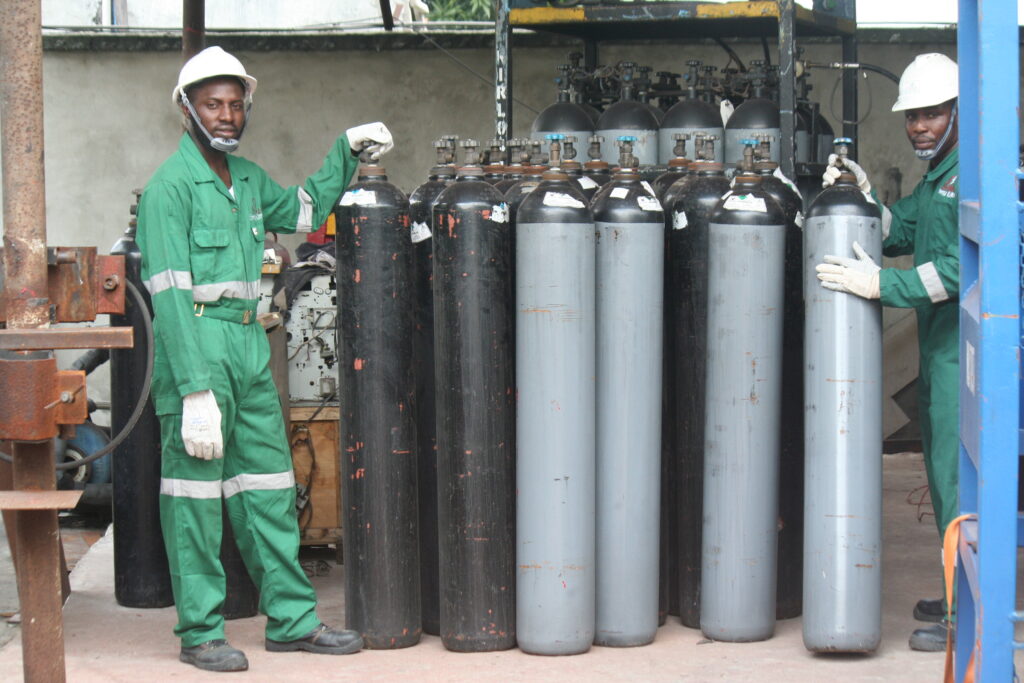
Industrial gases are the gaseous materials that are manufactured for use in industry. The principal gases provided are nitrogen, oxygen, argon, carbon dioxide, helium and acetylene. Although many other gases and mixtures are also available in gas cylinders. The industry producing these gases is also known as industrial gas, which is seen as also encompassing the supply of equipment and technology to produce and use the gases.[1] Their production is a part of the wider chemical industry (where industrial gases are often seen as “specialty chemicals”).
Industrial gases are used in a wide range of industries, which include oil and gas, petrochemicals, chemicals, power, mining, steel making, metals, environmental protection, medicine, pharmaceuticals, biotechnology, food, water, fertilizers, nuclear power, electronics and aerospace. Industrial gas is sold to other industrial enterprises; typically comprising large orders to corporate industrial clients, covering a size range from building a process facility or pipeline down to cylinder gas supply.

At Zeagle Energy Limited we provide the following Industrial gases and refrigerant gases for our esteemed clients at their beck and call.
Argon
Supporting a wide range of shielding, blanketing, and inerting applications with argon in the desired commercial purity grades
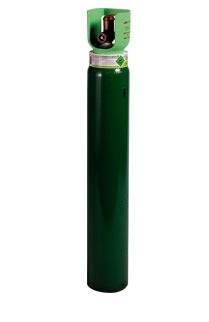
Argon (Ar) is a colourless, odourless, non-reactive, inert gas. In high concentrations, it has an asphyxiating effect. As argon is an atmospheric gas (0.93% vol.), it is generally sourced by air separation. A crude argon stream containing up to 5% oxygen is removed from the main air separation column and purified to produce the commercial purity grade required. Argon can also be recovered from the exhaust streams of certain ammonia plants.
Industrial Applications
Argon has many different applications in many industries. The most common one is as a shielding gas for arc welding – either in pure form or as part of various mixtures. It is one of the main gases used in filling mixtures for incandescent (filament) lamps, phosphorescent tubes, and thyratron radio tubes.
It is also used as a carrier gas in chromatography, sputtering, plasma etching and ion implantations. It provides a blanket atmosphere in crystal growth, viniculture, and pharmaceutical packaging. For excimer lasers, argon is blended with fluorine and helium. As an insulation gas, argon is a popular way of improving thermal insulation in multi-pane windows.
It has many protective applications in iron, steel, and heat treatment industries – particularly in the case of metals susceptible to nitriding when treated with a nitrogen-based atmosphere.
Less common applications include cryosurgery, refrigeration, decarburising of stainless steel, airbag inflation, fire extinguishing, spectroscopy, spectrometry and purging or balancing in laboratories.
Carbon Dioxide
Delivering carbon dioxide in various gaseous, liquid, and solid supply modes to meet a fast-growing spectrum of innovative applications.

Carbon dioxide has many well-known applications in the food and beverages industry – from carbonating drinks and conserving wine to modifying atmospheres for packaged foods. Dry ice – or solid CO2 – is commonly used for storage and transportation of temperature sensitive products such as frozen/chilled foods or medical/ pharmaceutical materials. Dry ice is used as a process coolant in food, chemicals, research, and pharmaceutical industries and is also an extremely effective and environmentally sound cleaning agent. In agriculture, CO2 can be used to enhance growth in greenhouses and as a feedstock for algae that produce bio-oil (green crude).
The non-flammable properties of CO2 make it a popular pressurising gas for everything from aerosols through fumigants to air guns. It has many other uses – including as a component of medical reanimation mixtures, a neutralizing agent for pH control, an inerting agent for mild steel welding, a replacement for blasting powder in quarrying and mining operations in compressed form and a blasting agent in solid form. Liquid CO2 is growing in popularity as a cryogenic refrigerant in mechanical refrigeration systems due to its environmental benefits.
CO2 is also employed for the chemical vapour deposition of silicon dioxide, active laser mixtures, Coleman nitrogen analysers, foam blowing, pulp washing, car emissions monitoring and environmental monitoring, fire extinguishing, surgery and sterilising, blood analysis, sample preparation, chromatography and the production of paints and varnishes.
We deliver gaseous, liquid and solid carbon dioxide in a variety of cylinders, vessels and containers to fit your precise application needs.
Helium
Meeting your local helium needs with the most reliable distribution network in the industry and a wide choice of packaging options.
Helium (He) is a colourless, odourless, non-toxic, non-corrosive and non-combustible gas. It is mainly sourced from natural gas wells. This valuable gas is in short supply the world over, which is why many applications incorporate recovery and recycling systems.
With the lowest boiling point of any gas (4.2 Kelvin or –269° Celsius), liquid helium is the coldest matter on Earth. This makes it ideal as a cryogenic agent for several cutting-edge medical and physics applications. For instance, it is used to cool superconductive magnetic coils in magnetic resonance imaging (MRI) and nuclear magnetic resonance (NMR) medical equipment.
In fact, helium is indispensable across a wide range of industries. For example, it is used to pressurise rocket fuel; create inert atmospheres for welding, heat treatment and epitaxial crystal growth; purge semiconductor atmospheres; calibrate analytical instruments; inflate airplane tyres and airbags; test for leaks; inflate large balloons for meteorological studies; and fill electronic tubes in neon signs.
It also combines with oxygen to create breathing gas mixtures for divers. The non-flammable, low-density properties of helium make it a safe choice for the entertainment industry, where it is used to inflate balloons at parties and special events.
Nitrogen
Building and operating air separators the world over to meet industry demand for nitrogen.
One of the main applications of nitrogen is blanketing, purging and sparging in the food and chemical industries. It can also be found in modified atmosphere packages (MAP) for foodstuffs. In liquid form, it is an agent to shock-freeze food, store biological material, perform cryosurgery and cryogenically grind plastics and rubbers, for instance.
In the semi-conductor industry, N2 is used in large quantities as a purge and carrier gas. In electronics, it acts as an inerting agent for epitaxial reactors. It is also useful as a carrier, zero and balancing gas in laboratory analysis. Other common applications include heat treatment, the production of ammonia, fire extinguishing in mines, tyre filling, shrink-fitting and cold traps, where nitrogen can help to increase vacuum efficiency.
We offer the full range of cylinders, generators, and on-site solutions to meet all volume and purity requirements.
Oxygen
Leveraging the combustion-sustaining, oxidising, and life-supporting properties of oxygen across the widest range of industries.
Oxygen is obtained on a commercial scale through the liquefaction and distillation of ambient air at air separation plants. A second purification process may be necessary if ultra-high purity levels are required. High-purity oxygen can also be produced through the electrolysis of water. Membrane techniques are suited to lower-purity requirements.
The main industrial application of oxygen is combustion. Many materials that do not normally burn in air will burn in oxygen so mixing oxygen with air greatly enhances combustion efficiency in iron and steel, non-ferrous, glass and concrete industries. It is widely combined with a fuel gas for cutting, welding, brazing and glass blowing, offering much higher flame temperatures and thus greater efficiency than just air. With oxyfuel, plasma and laser processes, a jet of gaseous oxygen is used to cut steel. Oxygen is also popular in thermal lancing to drill or cut through materials such as concrete, brick, stone, and various metals.
Due to its ability to help stabilise the arc and reduce surface tension, oxygen is used as an ingredient in some shielding gas mixtures. The chemical industry relies on pure oxygen to increase the efficiency of oxidation reactions, for instance. High-purity oxygen is used in laboratories, process-control operations, gas-cooled nuclear reactors, metal analysis instruments, and in semiconductor and optical fibre production.
On the water treatment front, oxygen is an effective way of purifying wastewater and treating sewage. Other applications include sealing glass ampoules in the pharmaceutical industry, oxygenation of water for aquaculture, modified atmosphere packaging (MAP) mixtures and liquid explosives.
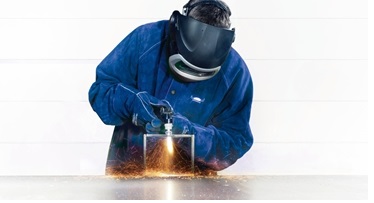
We supply the full range of fuel gases to suit many applications.
Various gases such as acetylene, natural gas, propane, propylene, and hydrogen can be used as a fuel for cutting and welding, heat treatment, as power and energy for transportation and combined with oxygen, for various industrial processes.
Most fuel gases are composed in whole or in part of hydrocarbons (methane, acetylene, propane, and propylene), hydrogen, carbon monoxide and oil vapours.
Fuel gas flames offer heat energy anytime, anywhere, whenever you need it.
Each fuel gas has a different ratio of carbon to hydrogen atoms, which means that different amounts of oxygen are needed to burn the gas efficiently. This ratio of fuel to oxidant and the molecule structure affects the temperature of the flame, as well as the flammability and explosive limits.
Our experts have many decades of experience in the use of fuel gases for welding and cutting applications. Not only do we supply the full range of compressed gases in cylinders, we can also help you optimise the flame temperature and oxygen jet and advise on the appropriate safety precautions.
Propane
The lowest flammability range of any of the commonly available fuel gases.

Propane (C3H8) is a colourless and highly flammable liquefied gas – although it has the lowest flammability range of any of the commonly available fuel gases. As a constituent of natural gas, it is obtained by refining and processing natural gas. Propane is heavier than air, with both a primary and secondary flash temperature. It is one of the main components in liquid petroleum gas (LPG) along with butane. As the ratios of these LPG gases vary from one supplier to another, the flame properties can also differ.
Also known as Autogas, propane is widely used as a car fuel, although it is also popular for industrial and domestic heating. Clean burning characteristics make propane ideal for a wide range of industrial and agricultural applications. These include oxy-propane cutting and brazing, soldering, preheating, heat treatment, shrink-wrapping, drying crops, heating greenhouses and livestock sheds as well as for flame-weeding and pest control. It is also employed in its pure form as the fuel gas in flame photometers.
As a specialty gas, it is used in mixtures to calibrate process control analyzers in the petrochemical industry. It is also employed as a refrigerant and in refrigerant blends and as an aerosol propellant. Other applications include controlled atmospheres in metallurgy, the production of various chemicals, efficiency testing of gas burners and engines and calibration gas mixtures.
Acetylene
The hottest and most efficient fuel gas.
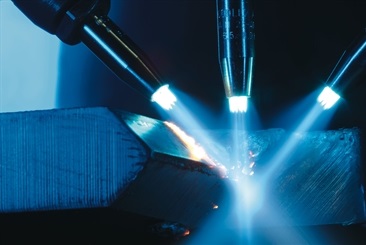
A low flame moisture content makes this fuel gas a good choice for many critical heating processes. Typical applications include flame heating, flame gouging, welding, flame hardening, flame cleaning, flame straightening, thermal spraying, spot-heating, brazing, texturing, profile-cutting, branding wooden pallets, wood-ageing and carbon coating.
Acetylene is the only fuel gas recommended for underground working conditions because it is lighter than air. It is also the only fuel gas, for instance, which can be used to weld steel.
In cutting, oxyacetylene gives the fastest preheating and piercing times of any fuel gas combination.
Benefits include:
· Improved cut quality
· Higher cutting speeds
· Faster cut initiation time
· Reduced oxygen use.
In atomic absorption flame spectroscopy, acetylene is combined with high-purity synthetic air or nitrous oxide as a fuel for the flame.
Beyond its obvious value as a fuel gas, acetylene has many other less-well-known applications. It is used to produce certain plastics and chemicals for instance. It also plays a role in organic synthesis (laboratory work) and chemical synthesis. In plant cultivation, it improves the forming of new flowers. It is also used as a carbon source in molecular manufacturing, in calibration gases for the gas, oil and chemical industries and in lung testing gases.
Acetylene is manufactured commercially by reacting calcium carbide and water. It is also a by-product of ethylene production.
Hydrogen
The highest thermal conductivity and pressure of all fuel gases.
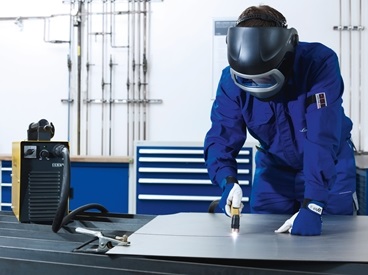
It is often mixed with argon to create a range of argon/hydrogen shielding gases for TIG and plasma welding. These shielding gas mixtures are primarily used for welding austenitic stainless steels and some nickel alloys. Hydrogen can also be used with argon in a range of gas mixtures for plasma-cutting (stainless steel and aluminium mainly).
In addition, it can be combined with oxygen for underwater flame cutting. Deeper cutting applications require higher fuel and oxygen pressures. Hydrogen is ideal here as it is supplied at higher pressures than other fuel gases. In the glass industry, hydrogen is used to form the rim on glasses.
Hydrogen has a vast application spectrum beyond its value as a fuel gas. It is used in the production of carbon steels, special metals, and semiconductors. In the electronics industry, it is widely employed as a reducing agent and as a carrier gas. High-purity hydrogen is also used as a carrier gas in gas chromatography.
Other processes that rely on hydrogen include the hydrogenation of vegetable and animal oils to produce margarine and other fats, hydro-treatment of petroleum products, desulphurisation of fuels, heat treatment of metals and leak testing.
Various petrochemical and chemical processes also employ hydrogen. It powers flames and torches in industry and laboratories. Although used as a rocket fuel in liquid form, it is perhaps better known these days as a green source of power for fuel-cell vehicles.
Other applications include HF/DF chemical lasers, solid physics research, bubble chambers in nuclear plants, the synthesis of ammonia and the cooling of turbogenerators in electrical power plants.
A refrigerant is a working fluid used in the refrigeration cycle of air conditioning systems and heat pumps where in most cases they undergo a repeated phase transition from a liquid to a gas and back again. Refrigerants are heavily regulated due to their toxicity, flammability, and the contribution of CFC and HCFC refrigerants to ozone depletion and that of HFC refrigerants to climate change.
REFRIGERANT GASES
At Zeagle Energy Limited, we supply some common refrigerants with very low climate impact which are.
§ R-290 (C3H8) widely known as Propane. It is a low cost, widely available and efficient. They also have zero ozone depletion potential. Despite the flammability, they are increasingly used in domestic refrigerators and heat pumps.
§ R-600a HC(CH3)3 known as Isobutane like R-290
Other widely used refrigerants that are available are.
§ R-717 (NH3) widely known as Ammonia commonly used before the popularization of CFCs. It is again being considered, but does suffer from the disadvantage of toxicity, and requiring corrosion resistant components, which restricts its domestic and small scale-use. Anhydrous ammonia is widely used in industrial refrigeration and hockey rinks because of its high energy and efficiency.
§ R-744 (CO2) widely known as Carbon dioxide was used as a refrigerant prior to the discovery of CFCs and now having a renaissance due it being non-ozone depleting, non-toxic and non-flammable. It may become the working fluid of choice to replace current HFCs in cars, supermarkets, and heat pumps.
§ R-134a CH2FCF3 known as 1,1,1,2- Tetrafluoro ethane mostly used in 2020 for hydronic heat pumps in Europe and USA despite high global warming impact (GWP)
§ R-32 CH2F2 known as Difluoromethane promoted as climate friendly substitute for R-134a and R-410a but still with high climate impact. They have high excellent heat transfer and pressure drop performance both in condensation and vaporization. They have atmospheric lifetime of nearly 5years. Currently used in residential and commercial air conditioners and heat pumps.